Affichage des articles dont le libellé est english. Afficher tous les articles

03/04/2014

Agile Democracy is the ultimate political solvent to establish the new freedom


"The only way that government is kept pure is by keeping these channels open, so that nobody may deem himself so humble as not to constitute a part of the body politic, so that there will constantly be coming new blood into the veins of the body politic; so that no man is so obscure that he may not break the crust of any class he may belong to, may not spring up to higher levels and be counted among the leaders of the state. Anything that depresses, anything that makes the organization greater than the man, anything that blocks, discourages, dismays the humble man, is against all the principles of progress. When I see alliances formed, as they are now being formed, by successful men of business with successful organizers of politics, I know that something has been done that checks the vitality and progress of society. Such an alliance, made at the top, is an alliance made to depress the levels, to hold them where they are, if not to sink them; and, therefore, it is the constant business of good politics to break up such partnerships, to re-establish and reopen the connections between the great body of the people and the offices of government.
To-day, when our government has so far passed into the hands of special interests; to-day, when the doctrine is implicitly avowed that only select classes have the equipment necessary for carrying on government; to-day, when so many conscientious citizens, smitten with the scene of social wrong and suffering, have fallen victims to the fallacy that benevolent government can be meted out to the people by kind-hearted trustees of prosperity and guardians of the welfare of dutiful employees,—to-day, supremely, does it behoove this nation to remember that a people shall be saved by the power that sleeps in its own deep bosom, or by none; shall be renewed in hope, in conscience, in strength, by waters welling up from its own sweet, perennial springs. Not from above; not by patronage of its aristocrats. [...] 
Politics in America is in a case which sadly requires attention. The system set up by our law and our usage doesn't work,—or at least it can't be depended on; it is made to work only by a most unreasonable expenditure of labor and pains. The government, which was designed for the people, has got into the hands of bosses and their employers, the special interests. An invisible empire has been set up above the forms of democracy. [...]
The masters of the government of the United States are the combined capitalists and manufacturers of the United States. It is written over every intimate page of the records of Congress, it is written all through the history of conferences at the White House, that the suggestions of economic policy in this country have come from one source, not from many sources. [...]

Shall we try to get the grip of monopoly away from our lives, or shall we not? Shall we withhold our hand and say monopoly is inevitable, that all that we can do is to regulate it? Shall we say that all that we can do is to put government in competition with monopoly and try its strength against it? Shall we admit that the creature of our own hands is stronger than we are? We have been dreading all along the time when the combined power of high finance would be greater than the power of the government. Have we come to a time when the President of the United States or any man who wishes to be the President must doff his cap in the presence of this high finance, and say, "You are our inevitable master, but we will see how we can make the best of it?"
We are at the parting of the ways. We have, not one or two or three, but many, established and formidable monopolies in the United States. We have, not one or two, but many, fields of endeavor into which it is difficult, if not impossible, for the independent man to enter. We have restricted credit, we have restricted opportunity, we have controlled development, and we have come to be one of the worst ruled, one of the most completely controlled and dominated, governments in the civilized world—no longer a government by free opinion, no longer a government by conviction and the vote of the majority, but a government by the opinion and the duress of small groups of dominant men.
If the government is to tell big business men how to run their business, then don't you see that big business men have to get closer to the government even than they are now? Don't you see that they must capture the government, in order not to be restrained too much by it? Must capture the government? They have already captured it. Are you going to invite those inside to stay inside? They don't have to get there. They are there. Are you going to own your own premises, or are you not? That is your choice. Are you going to say: "You didn't get into the house the right way, but you are in there, God bless you; we will stand out here in the cold and you can hand us out something once in a while?"
At the least, under the plan I am opposing, there will be an avowed partnership between the government and the trusts. [...] 
There is no hope to be seen for the people of the United States until the partnership is dissolved." 
(T.W. Wilson, 28th President of the US, 1856 – 1924 ; The New Freedom: A Call for the Emancipation of the Generous Energies of a People, 1913)

Agile Democracy is the ultimate political solvent. It is eau régale.

22/03/2014

Money Laundering And Sausages: The Making Of EU Laws

KOEN ROOVERS : Last Tuesday week, MEPs overwhelmingly voted in favour of public disclosure of the real owners of companies, trusts, and other businesses operating in the EU, aiming to curtail money laundering. How? Here's our step-by-step guide to European law-making.

There’s an old saying that the legislative process is a lot like making sausages – it’s confusing, messy, and you don’t really want to know how it’s done.
The European institutions in Brussels, the butcher shop in this case, decide how laws are drafted, changed, and combined to reach a final outcome. My colleagues and I followed this process, as European and national legislators debated revisions to European anti-money laundering rules.
[...]

In order for those negotiations to be successful, a majority of European governments need to be supportive of public registers for beneficial ownership. The UK and France have openly petitioned for public registers in the past, but other influential member states, like Germany, the Netherlands, and Sweden, have argued for more ‘flexible’ approaches for member states to achieve beneficial ownership transparency. Given Germany’s voting cloud in Council, an agreement on the basis of the European Parliament’s proposal without a change in its government’s position seems difficult to achieve.
The big question that therefore remains is whether the sausage that the European Parliament has prepared will turn out to be a Berliner Currywurst too.
My comment:
The big solution would be to "eat your own dog food". That is, for the civil society gathering the EU citizens to write themselves the law, and to let EU Parliament to vote it (or not), but without changing any word in the text. 
This is what the Agile Democracy's principles aim for.


07/03/2014

NSA gave instruction to governments on how to degrade the legal protections of our countries - Agile Democracy is the only antidote

Edward Snowden testimony before the European Parliament explains us why western governments are not vehement against the US administration because of the NSA mass surveillance programs:
One of the foremost activities of the NSA's FAD, or Foreign Affairs Division, is to pressure or incentivize EU member states to change their laws to enable mass surveillance. Lawyers from the NSA, as well as the UK's GCHQ, work very hard to search for loopholes in laws and constitutional protections that they can use to justify indiscriminate, dragnet surveillance operations that were at best unwittingly authorized by lawmakers. These efforts to interpret new powers out of vague laws is an intentional strategy to avoid public opposition and lawmakers’ insistence that legal limits be respected, effects the GCHQ internally described in its own documents as "damaging public debate." 
In recent public memory, we have seen these FAD "legal guidance" operations occur in both Sweden and the Netherlands, and also faraway New Zealand. Germany was pressured to modify its G-10 law to appease the NSA, and it eroded the rights of German citizens under their constitution. Each of these countries received instruction from the NSA, sometimes under the guise of the US Department of Defense and other bodies, on how to degrade the legal protections of their countries' communications. The ultimate result of the NSA's guidance is that the right of ordinary citizens to be free from unwarranted interference is degraded, and systems of intrusive mass surveillance are being constructed in secret within otherwise liberal states, often without the full awareness of the public. 
Once the NSA has successfully subverted or helped repeal legal restrictions against unconstitutional mass surveillance in partner states, it encourages partners to perform “access operations.” Access operations are efforts to gain access to the bulk communications of all major telecommunications providers in their jurisdictions, normally beginning with those that handle the greatest volume of communications.
Thus these governments have certainly betrayed our trust since years or decades.

Such erosion of the citizens' Rights would have been impossible under an Agile Democracy regime, because any modification of the laws would have been written and reviewed by the civil society, not by corrupted persons acting in secret.
When do these persons will be named traitors? This is how democracies are failing and dying.

The principles of Agile Democracy are an antidote to rejuvenate old western democracies.

13/02/2014

The Irish Constitutional Convention: Giving Citizens a Voice in Constitutional Debates

"In late 2012, the Irish government established a Constitutional Convention
...
Chaired by Tom Arnold (the former chief executive of the leading Irish international charity, Concern), the other 99 members of the Convention consist of 66 citizens and 33 elected legislators. Whereas the parties could determine by themselves how to select their members, the citizen members were selected at random by a survey company, which had a brief of ensuring that the membership was a fair reflection of the population in terms of gender, age, region, education and socio-economic status.
...
it has certainly had some impact already on the quality of democracy in Ireland. Emulating the same principles of deliberative democracy used in the British Columbia, Ontario and Dutch citizens’ assemblies, this provides a useful addition to our contemporary system of representative democracy. Something for other countries to emulate?"


This initiative can be ranked on the intermediate level in terms of using agile democracy principles, but it is demonstrating first the limits of representative democracy, and second the creativity delivered by European citizens and legislators to tackle the democratic deficit.

09/02/2014

Why Modern Elites Have No Legitimacy and Capacity to Govern

Excerpts from : "The Rise and Fall of Democracy? Meritocracy?", 29 june 2013, by Ivan Krastev

Ivan Krastev is Chairman of the Centre for Liberal Strategies, Sofia, Bulgaria, and Permanent Fellow at the IWM, Institute of Human Sciences in Vienna, Austria.

 "The time has come for “the reformist” to replace “the reformer” as the key figure in world politics. “The reformist” is a figure both similar to and very different from the figure of “the reformer” who was canonized in the last three decades. The reformer is like Isaiah Berlin’s hedgehog: he knows one big truth and he conceptualizes development as achieving this goal by removing the obstacles and following the right policy. “The reformer” is ideological, rigid and often insensitive to local context. But it is his rigidity that explains his success to transform society. In the time of growing uncertainty he is the one who has clear answers and they are always the same.
The reformist, in contrast, is a fox, he is expert in seeing opportunities where others see only problems, he is a man who knows where he wants to go but he allows the road to lead him. “The reformist” is a progressive opportunist who never loses his optimism and who is ready to form unthinkable coalitions for achieving his policy goals. He is not a genius of consistency but a genius of adjustment. And it is “the reformist elite” that the world urgently needs today."

I think the reformist must make his own the Agile spirit, and should take opportunity of the Agile Democracy principles.

01/02/2014

Agile Democracy against the elimination of the dangers posed by newly empowered individuals


Excerpts from the 08/2013 article "War on Terror Is not the Only Threat" by Harlan Ullman, author of the infamous and shameful doctrine "Shock and Awe" (emphasis mine):
"Hence, the counter-terrorism responses [...] aren't addressing the forces that are dramatically altering the nature of international politics. [...] 
The major enemy and adversary are no longer states bent on disrupting or dominating the system despite those who see China as a future foe. 
Instead, the more immediate danger rests in the dramatic empowerment of individuals and groups, for good and sadly evil, often lumped together as "non-state actors." 
Edward Snowden, Bradley Manning, countless "hackers" and anonymous people [...] whose actions have indeed constituted real threats and systemic disruptions are among the former. Al-Qaida and other radical groups reflect the latter. 
In essence, the 365 year-old Westphalian system that placed sovereign states as the centerpieces of international politics is being tested and in some cases made obsolete by the empowerment of individuals and non-state actors. As former national security adviser Brent Scowcroft observes, global politics has entered a post-Westphalian era. But very few have taken note and fewer have acted on this realization. 
The fundamental cause of this empowerment is the diffusion of all forms of power writ large commonly called "globalization," accelerated by the information revolution and instantaneous global communications and the real and perceived fragilities and weaknesses of states to intervention, interference and disruption by non-traditional actors. 
September 11th could become the demarcation point of this new era much as 1648 and the Treaty of Westphalia marked the beginning of the state-centric system of the international order. 
While the analogy is loose, it won't take centuries for the effects of globalization and the end or at least the transition of the Westphalian era to take hold. 
Beyond this inflection point in international politics, still unabsorbed and misunderstood by most governments and people, a second reality complicates taking effective action in what could truly be a "new world order," the description coined by U.S. President George H.W. Bush after the implosion of the Soviet Union more than two decades ago. 
Failed and failing government from Afghanistan to Zimbabwe with Brussels and Washington in between is the largest collective impediment to the betterment of mankind. 
Without an extraordinary crisis, little is likely to be done to reverse or limit the damage imposed by failed or failing governance. The United States is Exhibit A although there are far too many competitors for that title. 
However, the changing Westphalian system can and must be addressed if there is to be any chance of success in containing, reducing and eliminating the dangers posed by newly empowered non-state actors. 
We have been here before. Sixty-eight years ago this month, the nuclear age dawned over Hiroshima. Over time as nuclear and especially thermonuclear weapons were seen as more than just extensions of conventional munitions and potentially existential, a theory of deterrence emerged. We are at similar juncture regarding cyber where we lack an overarching understanding of the implications and possible consequences of this domain. 
The first step as the Westphalian system faces profound redefinition is understanding and recognizing that these shifts are under way. From that appreciation, specific concepts and ideas can be fashioned to help guide us on this journey.
The path will be difficult and tortuous. Politics and ideological preferences will confuse and distort clear vision. The tendency to overreact, as occurred after September 11th and the Snowden and Manning leaks, will collide with budget realities in which a great deal less will be spent on national security. And because of the pernicious nature of the U.S. system of government, finding institutions with the objectivity, courage and perseverance to chart this new unknown won't be easy. 
Yet this must be done."
You read correctly: Ullman promotes nothing less than an 'overreaction' of the cyber-command organization to "protect" the failing US state, at the expense of the citizens, specifically targeting then eliminating the empowered ones. 

The idea expressed here is to perform an 'Hiroshima' like extraordinary event in or using the Cyber domain and infrastructure, and then make 'deterrence' to emerge. This means all others sheepsuuh..citizens have to fear once for all that the threat from the rulers over them is absolutely real, and that the current State actors will never accept any change in the governance.

Ullman is saying that the infrastructure for such an event is ready, but the government is only lacking a 'clear vision' to fashion new 'national security' concepts, and to allocate new budgets to a 'courageous' security agency. 

If we recognize the failing statist governance and the inevitable emergence of the empowered citizen, Ullman's 'vision' of Will to Order is nothing different than the death of democracy. Americans, first among many others people, needs a Monitory Democracy. The principles of Agile Democracy can help and guide them.

Traité de Westphalie publié le 24/10/1648


26/01/2014

Agile Democracy: principles for the age of Monitory Democracy

A gift from heaven – democracy by parachute –
by the Japanese cartoonist Kato Etsuro, 1946

[from Wikipedia:]
The term monitory democracy is introduced in Keane's The Life and Death of Democracy (2009). It claims that from around 1945 democracy entered a new historical phase. 
In the age of ‘monitory democracy’, the language and ideals and institutions of democracy undergo many changes. 
For the first time in its history, democracy has grown familiar to people living within most regions of the earth, regardless of their language, nationality, religion or civilization. 
This process of ‘indigenisation’ helps explain why, again for the first time, there is an explosion of many different understandings of democracy (for many people, especially in poorer countries, it becomes synonymous with justice, electricity, sanitation and other public goods); and why there are references to ‘global democracy’ and much talk of democracy as a universal ideal. 

In the age of monitory democracy, less obviously, there are indications that the theory and practice of democracy are mutating, that its significance is changing because its institutions are being stretched into areas of life in which democracy in any form was previously excluded, or played only a limited role.

Once seen as the rule of the people, by the people and for the people, democracy is viewed more pragmatically, as a vital weapon for guaranteeing political equality against concentrations of publicly unaccountable power. That is what monitory democracy means: the ongoing public scrutiny and public control of decision makers, whether they operate in the field of government or inter-governmental institutions, or within so-called non-governmental or civil society organisations, such as businesses, trade unions, sports associations and charities.

In the age of monitory democracy, in contrast to the earlier eras of assembly democracy and representative democracy in territorial state form, many new mechanisms are mixed and combined with new ways of publicly monitoring and controlling the exercise of power. 
Representative forms of government do not simply wither, or disappear. Elections remain important and representative democracy within the framework of territorial states often survives, and in some countries it even thrives, sometimes (as in Mongolia, Taiwan and South Africa) for the first time ever. 
Efforts to renew representative government are commonplace, as in the civic involvement and clean-up schemes (machizukuri) in Japanese cities such as Yokohama and Kawasaki during the past several decades. But, for a variety of reasons that are related to public pressure and the need to reduce corruption and the abuse of power, conventional representative forms of democracy are coming to be supplemented (and hence complicated) by a variety of democratic innovations that are applied to organisations underneath and beyond governments. 
Others include public integrity mechanisms, congresses, blogging and other new forms of media scrutiny, as well as cross-border parliaments and open methods of co-ordination, of the kind practiced in the European Union. 
These inventions are unique to the age of monitory democracy, and they fundamentally alter both the political geometry and dynamics of democracy. Democracy becomes nothing less but much more than electoral democracy. 
According to Keane, although its future is by no means guaranteed, monitory democracy is the most intricate, complex and dynamic form of democracy, a type of post-electoral democracy that has long-term consequences and disorientating effects upon political parties, parliaments, politicians and governments. 

He concludes that in the age of public monitoring of power, democracy can no longer be seen as a done deal, or as already achieved. Monitory democracy is an unfinished experiment that both thrives on imperfection and requires fresh ways of thinking about democracy’s virtues and its imperfections and failures.

Reference:
John Keane, The Life and Death of Democracy, London, Simon and Schuster, 2009; translations available.

..................................................................


The simple primitive hierarchical structure of representative democracy is fostering unaccountable power and elites corruption. There is a needed transition toward the networked, horizontal, agile political structure for the XXI c. 

In resonance with the needs of the advanced form of monitory democracy, we have proposed the principles of the Manifesto for Agile Democracy as a framework to help the people to assess if a political system (or an initiative to improve it partly) guarantee political equality against concentrations of publicly unaccountable power. It is not only a concern of monitoring by the people, or transparency, but to avoid that the public policies could be written or modified by representatives. They can only vote for or against the submitted text.

Obviously the current representatives could think the people is not able to write these texts "because they have no expertise", but obviously they are fully wrong.

Agile Democracy is also about educating the people in the same time, for a practical purpose. It is the best guarantee of political equality and stability we can imagine. This is most scary for some people in power, and that's why they will never accept Agile Democracy. But the question is not about what the people in power is afraid of: it is about what the people and the civil society really WANT and how they empower themselves.

22/01/2014

Huxley and the Agile Democracy

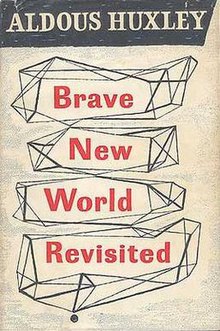
You've surely read Brave New World, but do you know about Brave New World Revisited published 27 years later? Here is how this content is related to the Agile Democracy (special mention to Michael Krieger).


"Under a dictatorship the Big Business, made possible by advancing technology and the consequent ruin of Little Business, is controlled by the State -that is to say, by a small group of party leaders and the soldiers, policemen and civil servants who carry out their orders. 
...
It is in the social sphere, in the realm of politics and economics, that the Will to Order becomes really dangerous. Here the theoretical reduction of unmanageable multiplicity to comprehensible unity becomes the practical reduction of human diversity to subhuman uniformity, of freedom to servitude. 
In politics the equivalent of a fully developed scientific theory or philosophical system is a totalitarian dictatorship. 
In economics, the equivalent of a beautifully composed work of art is the smoothly running factory in which the workers are perfectly adjusted to the machines. 
The Will to Order can make tyrants out of those who merely aspire to clear up a mess. The beauty of tidiness is used as a justification for despotism.

Organization is indispensable; for liberty arises and has meaning only within a self-regulating community of freely cooperating individuals. But, though indispensable, organization can also be fatal. Too much organization transforms men and women into automata, suffocates the creative spirit and abolishes the very possibility of freedom.
...
However hard they try, men cannot create a social organism, they can only create an organization. In the process of trying to create an organism they will merely create a totalitarian despotism.
...
Given a fair chance, human beings can govern themselves, and govern themselves better, though perhaps with less mechanical efficiency, than they can be governed by “authorities independent of their will”. Given a fair chance, I repeat; for the fair chance is an indispensable prerequisite. No people that passes abruptly from a state of subservience under the rule of a despot to the completely unfamiliar state of political independence can be said to have a fair chance of making democratic institutions work.
...
“[Political] parties,” we were told in 1956 by the editor of a leading business journal, “will merchandize their candidates and issues by the same methods that business had developed to sell goods. These include scientific selection of appeals and planned repetition"…The political merchandisers appeal only to the weakness of voters, never to their potential strength. They make no attempt to educate the masses into becoming fit for self-government, they are content merely to manipulate and exploit them.
...
Freedom is therefore a great good, tolerance a great virtue and regimentation a great misfortune.

The genetic standardization of individuals is still impossible; but Big Government and Big Business already posses, or will very soon possess, all the techniques for mind-manipulation described in Brave New World, along with others of which I was too unimaginative to dream. Lacking the ability to impose genetic uniformity upon embryos, the rulers of tomorrow’s over-populated and over-organized world will try to impose social and cultural uniformity upon adults and their children. To achieve this end, the will (unless prevented) make use of all the mind-manipulating techniques at their disposal and will not hesitate to reinforce these methods of non-rational persuasion by economic coercion and threats of physical violence. If this kind of tyranny is to be avoided, we must begin without delay to educate ourselves and of children for freedom and self-government.
...
Under the relentless thrust of accelerating over-population and increasing over-organization, and by means of ever more effective methods of mind-manipulation, the democracies will change their nature; the quaint old forms —elections, parliaments, Supreme Courts and all the rest— will remain. The underlying substance will be a new kind of non-violent totalitarianism. All the traditional names, all the hallowed slogans will remain exactly what they were in the good old days. Democracy and freedom will be the theme of every broadcast and editorial —but Democracy and freedom in a strictly Pickwickian sense. Meanwhile the ruling oligarchy and its highly trained elite of soldiers, policemen, thought-manufacturers and mind-manipulators will quietly run the show as they see fit.

Or take the right to vote. In principle, it is a great privilege. In practice, as recent history has repeatedly shown, the right to vote, by itself, is no guarantee of liberty.Therefore, if you wish to avoid dictatorship by referendum, break up modern society’s merely functional collectives into self-governing, voluntarily co-operating groups, capable of functioning outside the bureaucratic systems of Big Business and Big Government."

(A. Huxley, 1894 – 1963 ; Brave New World Revisited, 1958)
______________

In short: the Manifesto for Agile Democracy is an innovative proposition for such self-governing, voluntarily co-operating groups.

29/11/2013

Legislative crowdsourcing : Agile Democracy's break through this year

Agile Democracy made its first entry in Europe in 2013. It's still without a name, but you could easily recognize its characteristics, as well as the limits of current initiatives using the Manifesto for the Agile Development of Democracy as a check list. 

Here is a selection of initiatives showcased end of November 2013 during the World Forum for Democracy in Strasbourg.

Let's start with two models in which crowdsourcing is used in law-making in Finland.


On the Open Ministry online platform citizens propose petitions online. According to the Citizens Initiative Act those petitions have to be discussed in the Parliament if they gather 50,000 signatures in 6 months. Apart from gathering signatures, Open Ministry drafts the actual bills based on petitions with volunteer lawyers and other experts.
In another Finnish model, crowdsourcing is applied in law-making process in first mapping problems regarding the law and then finding solutions to those problems. Crowdsourcing as problem solving is used in off-road traffic law preparation on an online platform with gamification features such as gathering points and badges. The project is a pilot project of the Finnish Ministry of Environment and the Committee for the Future in the Finnish Parliament.
http://www.suomijoukkoistaa.fi/


I would like to mention also Parlement & Citoyens, an online platform since Feb. 2013 used for collaborative law-making with elected representatives, and which enjoy our attention. Parlement & Citoyens allows to everybody to participate to the law-making process with members of french parliament registered on the platform.


The World Forum is showcasing also a panel about alternatives to representative democracy. A session is focused on the "liquid democracy" concept, as used by Pirate Party.

Bringing new forms of participation to the political scene is the aim of liquid democracy. The German pirate party experiments with different materialisations of the abstract concept of liquid democracy to explore the possibilities of Internet-based political discussion and decision processes. This is not only inside the organisation itself but also for including and servicing civil society or regional institutions. A key aspect is the integration of formerly divided concepts of representational and direct democratic participation and features of social internetworking of the participants.
https://www.piratenpartei.de/

We can as well pay attention to the following sessions, which illustrate more specifically some steps of the Agile Democracy processes :
Puzzled by Policy (PBP) aims to strengthen citizen voices through an engaging and easy-to-use eParticipation platform to learn about and discuss important policy issues such as immigration - an area that directly impacts often hard-to-reach and socially exclude groups within society, and yet rarely incorporates their voices. PBP combines innovative and interactive online tools to engage citizens in the immigration and policy-making process. An immigration profiler helps users learn more about immigration issues and shows them where they stand in comparison to other stakeholders and users. The profiler can be embedded on any website/blog/social-media site. There is also a discussion forum, which enables citizen deliberation. Summaries of this participation are then passed onto interested policy-makers, who in turn provide feedback on the comments, increasing citizens influence on decision-making.
http://www.puzzledbypolicy.eu/
Loomio is an online platform for community governance and collaborative decision-making, developed by a co-operative social enterprise in Wellington. More than 3,000 people in hundreds of groups in more than 20 countries are already using Loomio as early adopting beta-testers. Users range from businesses to community organisations, software projects and social movements, to local and national government organisations. In New Zealand, Loomio is working closely with local government, providing a tool for large-scale citizen collaboration with Wellington City Council.
https://www.loomio.org/
Tavaana is Iran's pioneer e-learning institute for civil society. Tavaana – meaning ‘empowered' and ‘capable' in Persian – was launched in 2010 with a mission to support active citizenship and civic leadership in Iran through a multi-platform civic education and civil society capacity building program. Tavaana bridges the worlds of live, interactive e-learning with broad-based public education for democracy. Tavaana has successfully trained over 1,800 Iranians in live e-classrooms on topics ranging from digital safety to trauma healing to women's rights and has distributed learning resources – including e-books and manuals, translations, video and podcast lectures, and case studies – to thousands more. Tavaana's television programming reaches over nine million Iranians each week.
http://tavaana.org/en/

As a conclusion at this step: 
the french Constitution (Déclaration des droits de l’homme et du citoyen, Article VI) clarifies: "The Law is the expression of the general will. Any Citizens have the right to contribute personally or by their representative, to its making. (La Loi est l’expression de la volonté générale. Tous les Citoyens ont droit de concourir personnellement, ou par leurs représentants, à sa formation)". The Charter of Fundemental Rights of the European Union is only claiming that "it is based on the principles of democracy". A great social progress will have been made the day the equivalent of french Article VI will have been added to the Charter.

21/07/2013

About the authority and the discipline required by the government of self

"It is the characteristic of privilege and of every privileged position to kill the mind and heart of men. The privileged man, whether practically or economically, is a man depraved in mind and heart. That is a social law which admits of no exception, and is as applicable to entire nations as to classes, corporations and individuals. It is the law of equality, the supreme condition of liberty and humanity. [...]
A scientific body to which had been confided the government of society would soon end by devoting itself no longer to science at all, but to quite another affair; and that affair, as in the case of all established powers, would be its own eternal perpetuation by rendering the society confided to its care ever more stupid and consequently more in need of its government and direction.
But that which is true of scientific academies is also true of all constituent and legislative assemblies, even those chosen by universal suffrage. In the latter case they may renew their composition, it is true, but this does not prevent the formation in a few years' time of a body of politicians, privileged in fact though not in law, who, devoting themselves exclusively to the direction of the public affairs of a country, finally form a sort of political aristocracy or oligarchy. Witness the United States of America [...].
Consequently, no external legislation and no authority - one, for that matter, being inseparable from the other, and both tending to the servitude of society and the degradation of the legislators themselves.
Does it follow that I reject all authority? Far from me such a thought. In the matter of boots, I refer to the authority of the bootmaker; concerning houses, canals, or railroads, I consult that of the architect or the engineer. For such or such special knowledge I apply to such or such a savant. But I allow neither the bootmaker nor the architect nor the savant to impose his authority upon me. I listen to them freely and with all the respect merited by their intelligence, their character, their knowledge, reserving always my incontestable right of criticism and censure. I do not content myself with consulting a single authority in any special branch; I consult several; I compare their opinions, and choose that which seems to me the soundest. But I recognise no infallible authority, even in special questions; consequently, whatever respect I may have for the honesty and the sincerity of such or such an individual, I have no absolute faith in any person. Such a faith would be fatal to my reason, to my liberty, and even to the success of my undertakings; it would immediately transform me into a stupid slave, an instrument of the will and interests of others.
If I bow before the authority of the specialists and avow my readiness to follow, to a certain extent and as long as may seem to me necessary, their indications and even their directions, it is because their authority is imposed on me by no one, neither by men nor by God. Otherwise I would repel them with horror, and bid the devil take their counsels, their directions, and their services, certain that they would make me pay, by the loss of my liberty and self-respect, for such scraps of truth, wrapped in a multitude of lies, as they might give me.
I bow before the authority of special men because it is imposed on me by my own reason. I am conscious of my own inability to grasp, in all its detail, and positive development, any very large portion of human knowledge. The greatest intelligence would not be equal to a comprehension of the whole. Thence results, for science as well as for industry, the necessity of the division and association of labour. I receive and I give - such is human life. Each directs and is directed in his turn. Therefore there is no fixed and constant authority, but a continual exchange of mutual, temporary, and, above all, voluntary authority and subordination."
Mikhaïl Aleksandrovitch Bakunin (1814 - 1876); from God and the State, written in 1871. The source does not mention the exact translation used.

Put into application, the principles of Manifesto for an Agile Development of Democratie (MDAD) allow to avoid each pitfall mentioned by Bakunin.

13/01/2012

Are you really able to think in a new way ? Test your Agility

#MDAD

Steve Denning, a management guru, has written exactly about that in Forbes : Scrum Is A Major Management Discovery.
He has summerized very well why Agile can be applied to others domains, and beyond the IT one, giving some real examples in successfull firms. 
Then the extension of Agile from management in firms to politics was indeed pretty obvious : the Manifesto for Agile Development of Democracy was born.

Agile is about accepting a new way of thinking. If you are already a really convinced Agile practitioner, then you will have no problem to understand and accept the MDAD principles. MDAD is also a kind of a test of your maturity in Agile : are you ready in your mind to accept this new way of thinking, really ? 

12/01/2012

How Agile enhances the civic process

#MDAD
When new ideas are floating on the air, some minds are ready to catch them, anywhere they are.

I just discovered this evening the practical work described by Gery Kirk in July 2011 : "Democracy unleashed: bringing agility to citizen engagement". His  insight report community engagement is indeed one possible (among many others) application of the principles described in the Manifesto for Agile Development of Democracy. It is worth a read !

You may prefer to modify some of Gery's recommendations to best fit in your own case. That's why I have written the Manifesto for Agile Development of Democracy, to serve as a guide for any possible customisation of agile democracy practices. Some of the principles are always mandatory (for instance principle 12), others are not. But the more principles you will be able to follow, the more effective and democratic your engagement will be. 

30/12/2011

Manifesto for Agile Development of Democracy : Recipes


Mathew Lowry asks me some interesting questions about the Manifesto for Agile Development of Democracy (#MDAD). Thanks for that ! Here are my answers : 
“ It leaves me perplexed for two reasons.

To begin with, you claim it values “Individuals and their discussions … democracy and citizenship … Collaboration with the citizens” and so on more than anything else. But was it actually created through a democratic, collaborative process with citizens, or just dreamt up by you in your bedroom?”
Firstly : the origin of the idea comes from my own experience as citizen activism with NewropMag team, my experience about how to introduce agile practices into complex organizations, and previous work. And I give in the first sentence the link for detailed explanations (in French : you have to use Google translate, sorry) why this MDAD proposition is not Utopia, nor even Realistic Utopia : De l’utopie réaliste à l’anticipation politique. BTW, you seem to be sarcastic when you use the verb “dream”, don’t you ? 

Secondly : the Manifest is not in its final version ! You should have noticed the “v20111210” version number and the CC licence. This manifesto is intended to be improved using the same principles described in the manifesto : “eat your own dog food” recipe is very efficient for improvement. So if you like to contribute (or even fork), please do !
Secondly, I use Agile development at work to build opensource websites, and I don’t really see the link between it and your Manifesto. You use some agile language when you talk about optimizing for democracy (“policies with high added value for democracy … Agile political processes harness change for the citizen’s advantage … Define evolution of a real democracy with a frequency of several weeks”). 
Why would you think building software is fundamentally different than building anything else ? I had the luck in my life to work in very different domains and to study even more ones, and by essence they are all the same : what is important is not what you are building, but the team who is building. The relations between the people. The stronger you can make them, the better the result will be. 

Looks to the Agile Manifesto for Software Development. What did they say ? Exactly that. And they have defined principles to optimize these relations. 

Now looks to public policies. It is another name for “defining rules to better live together”. Doesn’t it look similar to defining the correct software requirements ? So why some Agile principles would not be a relevant answer to optimize the way they are defined ? I’m quite sure they are. 

However, you don’t propose any indicators, nor measurement methods, nor arbitrators. Who is the client? Who is the project manager? 
I could have proposed some of them, it’s pretty easy when you have accepted in your mind the underlying logic. But firstly I think the process to define MUST be fully collaborative, and secondly it is a goal for the second part of the story. The first part if to have this Manifesto improved, translated then signed by as many people as possible, who will agree to sign a few sentences they can quickly understand and approved (nothing is hidden in the middle of hundreds or thousands of pages). 

And most important, this MDAD Manifesto does not deal with a single one set of democratic processes : like with software development, many different Agile methods can be defined and used : all are different by some aspects, but all are Agile if they respect the Agile Manifesto principles. None are systematically better than any other. It is the same for democratic processes. Do not start by thinking a single one democratic process "one size fits all" is the obvious way. It is not. That's why we need to define upfront common principles at a upper conceptual layer. Theses principles can then be realized (implemented) differently within different contexts, allowing more efficiency, and more opportunities for people to adopt the principles. It worked like this for Agile Manifesto and changed the way almost all new software is done on earth. KISS recipe at work.

Do you think your remark is relevant when you decided to sign the Agile Manifesto for Software Development (you said you are using Agile methodology in your development work) ? Of course not. 

But if you want to proceed even further, here is the mapping I created between software development roles and roles in an Agile Democracy, and between activities :

 software
Real Democracy
individuals (speaking of team member)
(Same)
Cascade or « V style » development process
Current membership of parliament
interactions
Debate
tools
Current institutions
client
Citizen
fonctionnalities
Public policies
Working software
(set of public policies defined using) real democratic processes
documentation
Rights, rules
to deal a contract before realizing the project
To negotiate an electoral mandate based on the promises of a defined political agenda.
change management
Policies adaptation and political anticipation
Follow a plan
Follow a defined political agenda (or your own)
Deliver software
Define public policies
business people
An elected person
Business sponsor
Sponsor (Current institutions, NGO, think tank…)
Product Owner
An elected person
Product Owner Proxy
Technocrat, civil servant (non elected person)
Scrum Master
A member of the team who helps others to follow the chosen Agile Democracy methodology
developers
Members of citizen think tank or workgroup
development team
citizen think tank or workgroup, members of civil society
End user
Citizen
development 
Definition of public policies or strategic recommendations
Agile coach
Coach in Agile Democracy
External parties
Lobbies

"Your manifesto’d be hijacked by undemocratic interests in months, if not weeks."
To my mind, undemocratic interests are only moving in reactive mode. They simply ignore what they cannot see. They will be interested in MDAD only when it will be a success, means too late. And before that day, what hijack can they do with just an idea and a text under CC licence ?

Mathew, I hope you can participate and improve this MDAD initiative. Just by asking more questions if you wish.

10/12/2011

Manifesto for Agile Development of Democracy


"We are uncovering better ways of improving or expanding the practice of democracy and citizenship by doing it and helping others do it.

Through this work and citizen engagement we have come to value :
  • Individuals and their discussions more than the traditional electoral representation and institutions. 
  • Real democracy and citizenship more than exhaustive legislation and regulations. 
  • Collaboration with the citizens more than the negotiation of an electoral mandate based on the promises of a political agenda. 
  • The adaptation and political anticipation more than following a political agenda. 
In other words, although there is value in the later part of each sentence, we appreciate more the former. "

Read "Why this Manifesto for Agile Development of Democracy and the 12 Principles behind it."